Exploring the Creative Universe of Timothée Bordenave:
An In-Depth Written Interview with a Poet, Author, and Visual Artist from France
Written interview took place on October 17th, 2026 (online)
By Leni Marlina
–
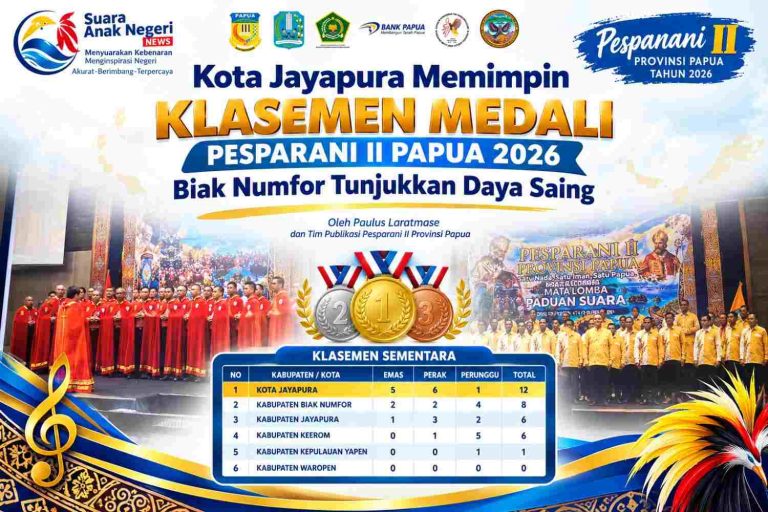
Baca juga: Kota Jayapura Memimpin Klasemen Medali Pesparani II Papua 2026, Biak Numfor Tunjukkan Daya Saing
Timothée Bordenave: An Artistic Journey Through Creativity, Philosophy, and the Human Spirit
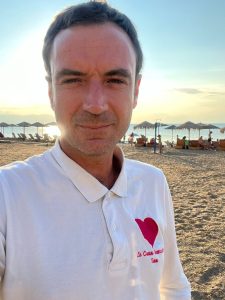
Timothée Bordenave is a French artist and photographer from Paris whose creative journey brings together visual art, photography, literature, poetry, music, and philosophical inquiry. His artistic vision is shaped by a lifelong passion for creativity and a deep fascination with the mysteries of human existence, the complexity of the human mind, and the relationship between imagination and reality. Drawn to the arts from an early age, Bordenave has developed a multidisciplinary approach to creative expression. His work is influenced by the artistic movements of Surrealism, Cubism, and Expressionism, whose distinctive approaches to perception, form, emotion, and representation have helped shape his artistic sensibility. Rather than confining himself to a single medium or discipline, he explores different ways of interpreting and expressing the world around him.
Baca juga: GEMA KALATIDHA DI GEDUNG-GEDUNG KERTAS
Although he pursued formal studies in law, Bordenave ultimately chose to devote himself to artistic creation, a practice that had been part of his life since childhood. His intellectual interests extend beyond the visual arts to mysticism, philosophy, poetry, and literature. These diverse interests reflect his desire to explore questions of meaning, consciousness, spirituality, and the many dimensions of human experience. Alongside his artistic and literary pursuits, Bordenave has also developed an interest in digital communication, running blogs and music-related websites. This engagement with online platforms complements his broader creative activities and reflects his interest in the circulation of ideas, culture, and artistic expression.
His academic and professional background is equally varied. In 2001, he completed his general secondary education with a major in literature, graduating in Paris, France. He subsequently studied law and earned a bachelor’s degree in private law from Paris II University in 2006. In 2012, he obtained a professional diploma in Information Management in Paris. Between 2012 and 2013, he worked under contract as a study engineer at Paris X University, contributing to work related to online learning in economics and finance. His professional experience continued in the fields of research, information, and library services. From 2017 to 2019, he worked as a contractual research librarian at INJS Paris, a school for deaf students. In 2023, he became Head of Research and Operations at the Bibliothèque du Protestantism Français in Paris, further developing his professional engagement with research and the preservation and management of knowledge.
Taken together, Bordenave’s artistic practice, literary interests, philosophical curiosity, and professional experience reveal a multifaceted intellectual and creative profile. His journey illustrates how different fields of knowledge and expression can coexist, inform one another, and open new possibilities for understanding the world. For Bordenave, art is not merely a professional pursuit or a visual exercise; it is part of a broader engagement with imagination, ideas, and the human condition. Through art, photography, poetry, literature, and his continuing exploration of philosophy and mysticism, he pursues a personal path of discovery—one that connects creative expression with intellectual reflection and the enduring search for meaning.
Timothée Bordenave’s Personal Journey and Artistic Identity
1. When did you first realize that art and literature would become important parts of your life? Could you share some of the early experiences that inspired you to become both a visual artist and a writer?
My love for art and literature began when I was very young. As a child and later as a teenager, I was fascinated by many forms of artistic expression, including painting, literature, music, cinema, and theatre. I never felt that creativity belonged to a single discipline. Rather, I was drawn to the many ways human beings could express their thoughts, emotions, and imagination. One of my earliest and most memorable experiences was receiving a gold medal in a violin competition organized by the distinguished Concours Léopold Bellan in Paris, France. I was only about eight or nine years old at the time, and receiving the highest distinction was a tremendous source of happiness and pride. That experience remains an important memory from my childhood, a moment when I felt that my dedication to an artistic pursuit had been recognized and appreciated. Looking back, I believe these early experiences helped nurture my lifelong appreciation for creativity in its many forms.
2. Looking back on your artistic journey, was there a particular moment when you realized that art was not simply an activity or profession, but a lifelong calling? Could you share that story with us?
I would say that this realization came gradually rather than through one defining moment. Creativity has become a way of life for me, something I try to incorporate into as many aspects of my existence as possible. For me, being an artist is not limited to producing paintings or writing books. It also means observing the world, recognizing problems, imagining possibilities, and finding ways to contribute something meaningful to society. A recent experience illustrates this belief. I once proposed to a European nongovernmental organization that anti-pollution nets be installed at the mouths of rivers to prevent plastic waste from entering the sea. The organization adopted the idea and subsequently informed me that the results had been impressive, with a significant amount of plastic pollution being intercepted. I was genuinely delighted by this outcome. It reminded me that creativity can extend beyond the boundaries of conventional artistic practice. An idea can become an instrument of positive change, demonstrating that imagination and human responsibility can work together for the benefit of our planet.
3. Throughout your life, who or what has most influenced your development as an artist and writer?
It would be difficult to identify only a few influences, because my artistic and intellectual development has been shaped by a wide range of figures, movements, and traditions across art, music, and literature. In my painting, I feel particularly inspired by the emergence of modern art in Paris during the twentieth century, especially the artistic atmosphere associated with the First School of Paris. That period represents an important chapter in the history of modern artistic expression, and its spirit continues to resonate with my own visual practice. In literature, I am drawn to the Romantic and Aesthetic movements that developed in nineteenth-century France and Europe. Victor Hugo is one of the authors whose work has particularly inspired me. I am also deeply interested in the European Renaissance and its humanist traditions. Figures such as Leonardo da Vinci and Michel de Montaigne are especially meaningful to me because they embody a broad understanding of human intelligence, imagination, and the pursuit of knowledge. Together, these influences have encouraged me to approach creativity as something that transcends disciplinary boundaries. Art and literature, in my view, are different yet complementary ways of exploring the human condition.
4. How have your personal experiences, memories, dreams, and emotions shaped the person and artist you are today?
My personal experiences and reflections occupy a central place in my creative process. In many ways, they form the foundation of everything I produce, whether it is a painting, a book, a poem, a story, or an essay. I often draw directly from situations I have experienced, memories I continue to carry, and emotions that have accompanied me through different stages of life. These experiences provide me with material that is both deeply personal and potentially meaningful to others. I believe that our lives offer us an inexhaustible source of inspiration. Even ordinary experiences can reveal something significant when we take the time to reflect upon them. A memory may gradually become a narrative, an emotion may find its expression through color, and a personal reflection may develop into a philosophical question. For me, the creative process is therefore inseparable from the experience of living itself. My work emerges from my encounters with the world and from the meaning I gradually discover within them.
5. If you were asked to describe yourself beyond labels such as painter, writer, or poet, how would you define your identity?
I would be very happy to be considered a humanist. Beyond the particular disciplines in which I work, I see myself as someone who values human intelligence, creative expression, and the capacity of individuals to contribute positively to the lives of others. Painting, writing, and poetry are different means through which I explore and communicate my ideas. Yet, beneath these different forms of expression, there is a common aspiration: my love for my fellow human beings. Ultimately, I hope that my work can reflect a commitment to humanity, encourage thoughtful reflection, and communicate values that bring people closer to one another.
Philosophy of Art and Creativity
6. Your paintings often celebrate beauty, serenity, and the simple joy of being alive. In a world frequently marked by conflict, uncertainty, and anxiety, what inspires you to continue creating works that radiate hope and grace?
Perhaps the answer is hope itself. I also believe that my inspiration comes from a deep appreciation for life and from the goodwill I feel toward the world around me. I have a genuine affection for the experience of being alive, with all its complexities, challenges, and unexpected moments of beauty. Through my artistic abilities, I would like to share that feeling with others and, in some small way, help spread it throughout the world. I do not believe that art can eliminate suffering or resolve every conflict. However, I believe it can offer people moments of peace, remind them of the beauty that still exists, and encourage them to look toward the future with greater openness and optimism. If my paintings can communicate even a little of that hope and serenity, then I feel that they have accomplished something worthwhile.
7. Many artists describe their work as a dialogue with the world. When you paint or write, whom do you feel you are speaking to: yourself, a particular audience, humanity, nature, or something beyond all of these?
This is a difficult question to answer precisely because the creative process involves both an intimate relationship with oneself and a desire to communicate with others. I create my works with humanity in mind. I hope that the paintings and writings I produce can reach people, invite them to reflect, and perhaps offer them something positive to carry into their own lives. At the same time, creating art brings me personal happiness. When I paint or write, I experience a sense of peace and serenity that is deeply beneficial to me. The creative process allows me to withdraw, at least temporarily, from the noise and demands of everyday life and enter a space in which I can concentrate on what I feel and imagine. In this sense, art serves two complementary purposes: it is a way of communicating with the world and a way of finding inner balance. I create for others, but I also create because the act itself enriches my own life.
8. What does creativity mean to you? Is it a discipline, a gift, a necessity, or perhaps a way of understanding life?
I do not see these interpretations as mutually exclusive. Creativity can be a gift, a discipline, a necessity, and a means of understanding life, all at the same time. For me, creativity is fundamentally connected to the way I experience existence. It is not something I simply switch on when I begin painting or writing. Rather, it influences how I observe the world, interpret my experiences, and respond to the situations I encounter. I often think of creativity in relation to the expression the art of living. Just as an artist gradually shapes a painting, we continually shape our lives through our decisions, experiences, relationships, and reflections. In that sense, creativity is not merely about producing something beautiful or original. It is also about learning how to live with greater awareness, imagination, and sensitivity.
9. How do solitude, silence, contemplation, and observation contribute to your creative process?
I have always appreciated silence and stillness. For me, there is an essential moment in the life of an artist when one must stand alone before a canvas, a blank sheet of paper, or an unfinished piece of work. These moments of solitude allow me to concentrate more deeply and establish a closer relationship with what I am trying to create. They provide the mental space necessary for ideas to emerge and develop without being interrupted by the constant demands of the outside world. Living and working in Paris, a city filled with movement, activity, and stimulation, makes these quiet moments particularly valuable to me. Stepping away from the intensity of urban life helps me recover my concentration and reconnect with my creative intentions. I do not consider solitude an escape from the world. Rather, it is a way of returning to the world with a clearer mind and a renewed capacity to observe, understand, and create.
10. If creativity were a landscape, what would that landscape look like, and where would you place yourself within it today?
I find this question particularly challenging because I have experienced so many landscapes and environments that have left lasting impressions on me. I am especially drawn to places where mountains meet the sea, where the terrain changes dramatically and offers different perspectives on the natural world. I appreciate landscapes that invite exploration and reveal their beauty from multiple viewpoints. Throughout my life, I have encountered extraordinary places: the jungles of Vietnam and Cambodia, the mountains of France and other parts of Europe, and the vibrant urban landscapes of Tokyo, Berlin, Rome, London, and New York. One particularly moving memory is my ascent of Mount Fuji in Japan. The deserts of Syria and Morocco have also profoundly affected my imagination and emotions. I remember taking a brief swim in the Euphrates River, near the border between Syria and Iraq. Being immersed in a river so deeply connected to human history was an extraordinary experience. I also remember the olive groves of Italy and the richness of the natural environment in Spain. These places have taught me that inspiration is not confined to a particular geographical location. Almost anywhere can become a source of discovery if we approach it with openness and a positive spirit. Ultimately, I feel that the Earth is an extraordinary gift. Its landscapes, cultures, and natural wonders continually remind me of the beauty and richness of existence. If creativity were a landscape, perhaps it would resemble a world in which mountains, rivers, forests, deserts, and cities coexist, each offering a different perspective. I would place myself somewhere along its many paths, still exploring, still learning, and still discovering new ways to express what life has taught me.
Painting and Visual Art
11. Your visual works frequently feature skies, birds, trees, hearts, stars, and female figures. What symbolic meanings do these recurring elements hold for you?
The symbols that appear in my work are numerous, and explaining the meaning of each one would require a much longer discussion. Generally speaking, however, I use these visual elements to communicate ideas and feelings that I consider positive, peaceful, and oriented toward the future. I am interested in the ability of images and symbols to convey a message without necessarily relying on lengthy explanations. A simple form can sometimes communicate something meaningful to the viewer, leaving room for personal interpretation and emotional connection. For me, the important point is not that every symbol should have one fixed or universally accepted meaning. Rather, I hope that the visual language of my paintings can create an atmosphere of serenity, encourage reflection, and express a constructive outlook on life.
12. Have these visual symbols evolved over time? Do they reflect different stages of your personal and artistic journey?
Yes, many of the symbols I use today have roots in earlier periods of my life, although their forms and meanings have evolved over time. During certain stages of my artistic development, I was particularly interested in magical symbols, esoteric imagery, and references to alchemy. These interests influenced some of my earlier paintings and drawings and contributed to the development of my personal visual vocabulary. More recently, I have returned to a symbolic language of my own invention, which I call Koa. I used this language in my paintings and drawings many years ago, and it has recently reappeared in my artistic practice. Its return is an interesting development for me because it reconnects my present work with an earlier period of exploration. It also demonstrates how certain artistic ideas can remain dormant for years before finding their way back into our lives in a new form. If I remember correctly, the heart was among the earliest symbols I began using. It remains a meaningful part of my personal visual language.
13. Your paintings are often rich in color and emotion. How do you decide on a particular color palette when beginning a new work?
Thank you for this question. My choice of colors is largely intuitive and often begins with an emotional impulse. At present, I frequently work with shades of blue, although the dominant colors in my paintings have changed over the years. There was a period when I used red much more often. These changes seem to emerge naturally from my evolving sensibilities rather than from a fixed artistic rule. When I begin a painting, I do not necessarily follow a predetermined system for selecting colors. Instead, I allow my intuition to guide me toward a particular tone or combination of tones. As the work develops, I gradually introduce other colors and explore how they interact with one another. My aim is to establish a sense of harmony between the different elements of the composition, while also ensuring that the colors correspond intuitively to the forms, figures, or ideas being expressed. For me, color is therefore both an emotional response and a process of visual discovery. I begin with a feeling, then allow the painting itself to guide me toward a harmonious result.
14. Can you walk us through your creative process from the first spark of inspiration to the completion of a painting?
My approach to painting and drawing is primarily intuitive. I am guided by a sense of harmony and by the possibilities that emerge as I gradually fill the available space. Usually, I begin with an initial idea, an image in my imagination, or a particular source of inspiration. At the outset, I may have a general sense of the result I would like to achieve. However, I do not want to become so attached to that initial intention that I lose the freedom to explore other possibilities. As I work, the composition evolves, and new ideas often emerge from the forms, colors, and relationships already present on the canvas. I consider this freedom an essential part of the creative process. A painting should not necessarily be a mechanical execution of a plan established in advance. It should also allow room for discovery, unexpected developments, and intuitive decisions. In this way, the finished work becomes the result of a dialogue between my initial inspiration and the possibilities that emerge while I am painting. The process itself helps determine the final form of the artwork.
15. When viewers stand before your paintings, what emotions or reflections do you most hope they will experience?
I prefer to leave viewers free to interpret my paintings according to their own perceptions, experiences, and sensibilities. Each person approaches an artwork with a different personal history and a unique way of understanding the world. I cannot place myself in the position of every viewer, nor would I want to impose a single interpretation upon them. I believe that one of the beautiful qualities of art is precisely this openness to different responses. A painting may awaken different memories, emotions, or reflections in different people, and these interpretations can all contribute to the richness of the encounter. Nevertheless, there is one feeling I would be particularly happy to share with those who experience my work: a sense of peace and joy. These are qualities I personally value when I consider a painting successful. If a viewer experiences something similar, then I feel that the artwork has created a meaningful connection between us.
16. Among all the paintings you have created, is there one that feels especially significant to you? What story lies behind it?
One of the most significant areas of my artistic research concerns sacred geometry, particularly my attempts to approach a solution to the ancient mathematical problem known as squaring the circle. I began exploring the foundations of my proposed approach around ten years ago, and the ideas that emerged from this research remain particularly important to me. What fascinates me is the relationship between geometry, visual composition, and the search for underlying order. These investigations have influenced some of the designs and artworks that I consider especially meaningful within my overall body of work. For me, sacred geometry represents more than a collection of geometric forms. It offers a way to investigate relationships, proportions, and structures that can be translated into visual expression. My research in this field, together with the artistic developments that have grown out of it, constitutes one of the most important parts of my creative journey.
17. If you could choose one painting to represent your entire artistic journey, which would it be and why?
This would be a difficult choice because my artistic journey has developed through many different periods, interests, and experiments. However, I would point toward some of the works I created when I was a young student in the 2000s. At that time, I was deeply interested in esoteric literature and alchemical traditions, and these readings inspired me to explore particular symbols, forms, and visual ideas. I have preserved a few of those early works, and they remain meaningful to me today. When I look back at them, I see more than individual paintings. I see the beginnings of a personal artistic language and the foundations upon which later developments were built. Although my interests and methods have evolved since then, those early works continue to occupy a special place in my memory. They remind me that an artistic journey is not created all at once. It develops gradually, through experimentation, reflection, and the accumulation of experiences that continue to shape us over time.
Writing and Literary Creation
18. You have published literary works in both French and English. What originally inspired you to become a writer?
I have now published twenty-seven books, and my love of writing began with my love of reading. When I was a young child, I read extensively and discovered the particular pleasure that literature could bring into a person’s life. As I experienced that pleasure, I began imagining how wonderful it would be to share my own ideas with other people and perhaps offer them a similar experience through my writing. That desire to communicate gradually became an important motivation for me as a writer. Over the years, my life has provided me with a wide range of experiences, memories, emotions, and reflections. I often draw upon this personal material when developing my literary works. Through my books, I try to transform what I have lived and learned into narratives and reflections that may be meaningful to readers whose experiences are different from my own. For me, writing is not simply the act of recording events or expressing personal opinions. It is an opportunity to shape experience into something that can be shared with others, perhaps offering them a new perspective, an unexpected emotion, or a positive message.
19. How does the creative process of writing differ from the process of painting?
Writing and painting involve different ways of thinking for me. When I write, I tend to concentrate considerably on the meaning of what I am trying to communicate. I pay close attention to the ideas, reflections, and messages that emerge through the text. Painting, by contrast, is more strongly guided by my concern for harmony, beauty, color, and visual composition. Although meaning can certainly be present in my paintings, I approach it differently from the way I approach meaning in my literary work. In painting, I often allow intuition to guide the development of the composition. In writing, I tend to give greater attention to the substance and significance of the ideas being expressed. There is also a difference in the rhythm of my creative life. I often experience periods during which I concentrate more intensively on writing, followed by periods when I devote more time to painting and other visual arts. I find this alternation natural and productive. Each discipline offers a different way of expressing my experiences and reflections, and moving between them allows me to explore creativity from different perspectives.
20. Do your literary works usually begin with an image, a memory, an emotion, a question, or something else entirely?
My literary works often emerge directly from my experiences in life, although the starting point varies considerably from one work to another. Sometimes an event or situation provides the initial material. At other times, a personal reflection or an experience that has remained in my memory may gradually develop into a literary idea. I do not follow a single formula for beginning a book, story, or poem. The process depends on the particular work and on what I feel compelled to explore at that moment. What matters most is the relationship between lived experience and literary expression. I am interested in taking something that has happened in my life and discovering how it might be transformed into a narrative or a reflection that can speak to others. In this sense, my writing often begins with reality but develops through interpretation. The experience provides the foundation, while the literary process allows me to explore its meaning and communicate it in a form that readers can engage with.
21. Many readers believe that literature reveals aspects of a writer that ordinary conversation cannot. What parts of yourself do you find easier to express through writing?
Faith is perhaps the most important example. My books and other writings provide me with a meaningful way to express my Christian faith, particularly my belief in the Lord, the Holy Spirit, and Jesus Christ. These are deeply personal convictions, and I sometimes find them more difficult to articulate in ordinary conversation. In contemporary French society, where diversity and modernity shape many aspects of public life, expressing a structured Christian faith can sometimes feel less straightforward in everyday interactions. Literature offers me a different kind of space. Through writing, I can explore my beliefs more thoughtfully, give them greater depth, and communicate them in a form that allows readers to encounter them at their own pace. For me, this is one of the important possibilities of literature: it allows us to express dimensions of our inner lives that may not always find an appropriate place in ordinary conversation. Writing enables me to share not only my experiences and reflections but also the spiritual convictions that contribute to my understanding of existence.
22. Are there particular authors, literary traditions, or artistic movements that have significantly influenced your writing?
I have a particular appreciation for nineteenth-century European poetry and for the Romantic and Naturalist movements that developed in France and elsewhere in Europe during that period. Victor Hugo is one of my principal literary inspirations, although many other writers have also influenced my intellectual development. Among them are Leo Tolstoy and Émile Zola, as well as the more recent writers John Steinbeck and Antoine de Saint-Exupéry. These authors offer different perspectives on human experience, society, morality, and the complexities of individual life. Their works have helped shape my appreciation for literature as a means of exploring both personal emotions and broader questions about humanity. Today, my inspirations also come increasingly from sacred and religious texts, alongside the works of classical philosophers. I am particularly interested in thinkers such as Plato, Aristotle, Michel de Montaigne, Blaise Pascal, René Descartes, and Immanuel Kant. Their writings encourage reflection on knowledge, morality, faith, reason, and the nature of human existence. For me, these literary and philosophical traditions are not isolated fields of interest. They form part of a continuing intellectual conversation through which I seek to understand the world and develop ideas that I can express through my own writing.
23. What role does imagination play in your literary work?
Imagination plays an essential role in my writing, and I see it as closely connected to memory. Many of my texts are auto fictional, meaning that they draw upon situations I have personally experienced while transforming those experiences into fictional or literary narratives. An event from my life may become the starting point for a short story, a novella, a poem, or another form of literary expression. However, the process involves more than simply remembering what happened. I must also imagine how to interpret the experience, select the elements that may be meaningful to a reader, and reshape the material into a coherent and engaging work. A personal memory, for example, may be perfectly clear to the person who experienced it but may not automatically be interesting or understandable to someone who was not there. The writer’s task is to bridge that distance. I find this transformation particularly rewarding. It allows me to revisit my own experiences while discovering new meanings within them and presenting those meanings in ways that may resonate with others. In my novellas, this process can bring an autobiographical experience closer to the form of a tale. In my poetry, it may lead toward something resembling a fable, in which a particular experience becomes a vehicle for a broader reflection. Ultimately, imagination allows me to move beyond the simple chronicle of events. It gives me the freedom to transform lived experience into literature, creating works that preserve something of my personal history while opening themselves to the imagination, emotions, and reflections of an unknown reader.
Concluding Reflection: Art as a Way of Living
Across painting, literature, and personal reflection, one central idea emerges from this artistic journey: creativity is not merely something we produce; it is also a way of experiencing life and connecting with humanity. For Timothée Bordenave as artist and writer, the creative impulse has developed through childhood encounters with music and the arts, intellectual engagement with literary and philosophical traditions, personal memories, spiritual convictions, and a continuing fascination with the world. Painting provides a space for intuition, visual harmony, and symbolic expression. Writing offers an opportunity to examine experience, explore ideas, and communicate reflections that might otherwise remain unspoken. Although these disciplines operate differently, both arise from a shared desire to understand life and give meaningful form to what has been experienced. Timothée Bordenave’s commitment to humanism further connects these creative pursuits. Art becomes not only an individual practice but also a potential contribution to the lives of others, whether through a painting that inspires serenity, a book that encourages reflection, or an idea that helps address an environmental problem. Perhaps the most important lesson is that creativity does not require us to separate beauty from responsibility, personal fulfillment from service to others, or imagination from the realities of everyday life. These dimensions can coexist and enrich one another. To live creatively is to remain attentive to the world, receptive to experience, and willing to transform what we discover into something that can be shared. In this sense, the artist’s journey is never entirely complete. Each memory, encounter, landscape, philosophical question, and moment of inspiration may open a new path toward expression. And perhaps this is what it ultimately means to embrace the art of living: to continue discovering beauty in existence, to seek meaning in our experiences, and to offer something of ourselves to the wider human family through the work we create. (Leni M- SAN)